
In the Hong Kong station cluster server environment, security logs are key evidence for quickly identifying and locating the source of security incidents. This article focuses on log collection, centralized management, and analysis strategies to help operations and security teams improve response times and evidence collection efficiency in localized scenarios.
The importance of server logs at Hong Kong data centers
Under a cluster architecture, each server generates a large amount of access, system, and application logs. For Hong Kong Station Cluster For servers, timely collection and archiving of these logs can restore the timeline of events, identify affected hosts and attack paths, thereby reducing the time from detection to response and improving the accuracy and compliance of incident handling.
Collection and Centralized Management Strategy
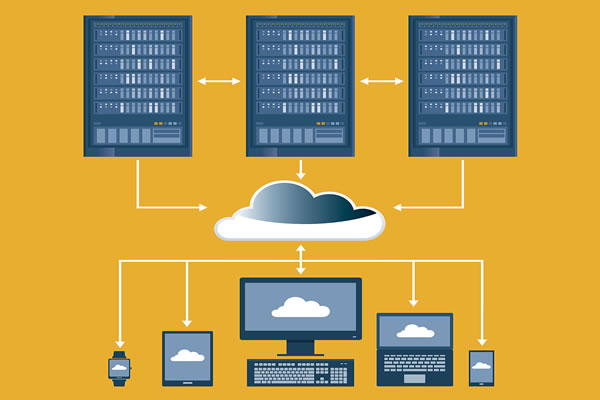
It is recommended to adopt a unified log collection and transmission solution to securely centralize logs from various nodes to a log server or SIEM platform. Ensure time synchronization (Hong Kong time zone, UTC+8), log formatting, field standardization, and transmission encryption to facilitate subsequent retrieval, correlation, and long-term storage for troubleshooting and auditing purposes.
The role of log analysis in quickly identifying the source of security incidents
A complete attack chain view can be constructed through log correlation analysis: External scans, intrusion attempts, and internal lateral movement can all be represented in time series. By combining IP addresses, session IDs, user account information, and process details, analysts can quickly identify the initial point of intrusion, infected hosts, and key attack activities.
Common Security Incident Types and Log Characteristics
Common events include brute force attacks, web injection, uploading malicious payloads, backdoor communication, and data exfiltration. Log anomalies typically manifest as a sharp increase in failed login attempts, suspicious User-Agents, abnormal port connections, or high-volume outbound traffic. By combining these with behavioral baselines, deviations from normal patterns can be quickly identified.
Suggestions for efficient location methods and tools
Efficient localization relies on parallel rule matching and anomaly detection: Use structured parsing (JSON, field indexing) to improve query speed, combined with threshold-based alerts and machine learning anomaly detection to identify unknown threats. In the context of Hong Kong station clusters, optimizing indexing strategies and partitioning ensures timely retrieval of massive amounts of logs.
Emergency Response Procedures and Evidence Collection Considerations
In the event of a security incident, relevant logs should be saved immediately, suspicious sources should be blocked, and affected nodes should be isolated. Keep the original logs and calculate hashes to ensure integrity, record each step of the operation for subsequent forensics and compliance reviews, while working with legal and compliance teams to handle cross-border or local regulatory matters.
Summary and Recommendations
Security log analysis for Hong Kong’s server cluster is a core capability for quickly identifying the source of security incidents. It is recommended to establish a unified logging platform, ensure strict time synchronization, define retention and access policies, and combine automated alerts with manual analysis processes. Regular emergency response drills should also be conducted to improve the overall security awareness and response efficiency of local site clusters.
- Latest articles
- How Can Enterprises Choose The Cheapest Malaysian Vps To Achieve High Availability Within The Budget?
- Singapore Server Circumvention And Proxy Deployment Best Practices For Overseas Access Acceleration
- Compare The Pros And Cons Of Singapore Cn2 Gia And Other Acceleration Solutions From The Perspective Of Operating Costs And SLA
- Website Migration Case Display: Things To Note When Switching Between Free Space And Cloud Server In Hong Kong
- How Korean E-commerce Sites Optimize User Experience And Reduce Bounce Rates
- A Developer’s Perspective On Malaysia’s Google Cloud Server Network And Security Configuration
- Hong Kong Station Group Server Network Security Benefits And Risk Prevention And Control Solutions Brought By Multiple IPs
- How To Know If It Is A Hong Kong Native IP? Common Misunderstandings And Explanations Of Accurate Determination Methods
- Practical Steps On How To Verify Whether Tencent Cloud Hong Kong Servers Are Fast When Choosing A Computer Room And Operator
- How To Tell If The Cheapest US Server Is Reliable When You're On A Budget
- Popular tags
-
The Impact Of New Ip On Hong Kong Site Group Servers And Solutions
discuss the impact of new ip on hong kong site group servers and response strategies to help seo optimization. -

Hong Kong TV Room Pictures Show You The Industry Style
Through the Hong Kong TV room picture gallery, you can understand the industry style, explore the design and layout of the TV room, and enhance your understanding of the TV industry. -

Discussion On The Main Differences Between Hong Kong Native Ip And Broadcast Ip
discuss the main differences between hong kong native ip and broadcast ip, understand its importance in network applications, and provide suggestions for choosing the appropriate ip.